
Digital public services. With accountable decisions.
Connect information, applications and operational workflows while keeping access, human responsibility and continuity explicit. We shape software and AI around a defined public-service use.
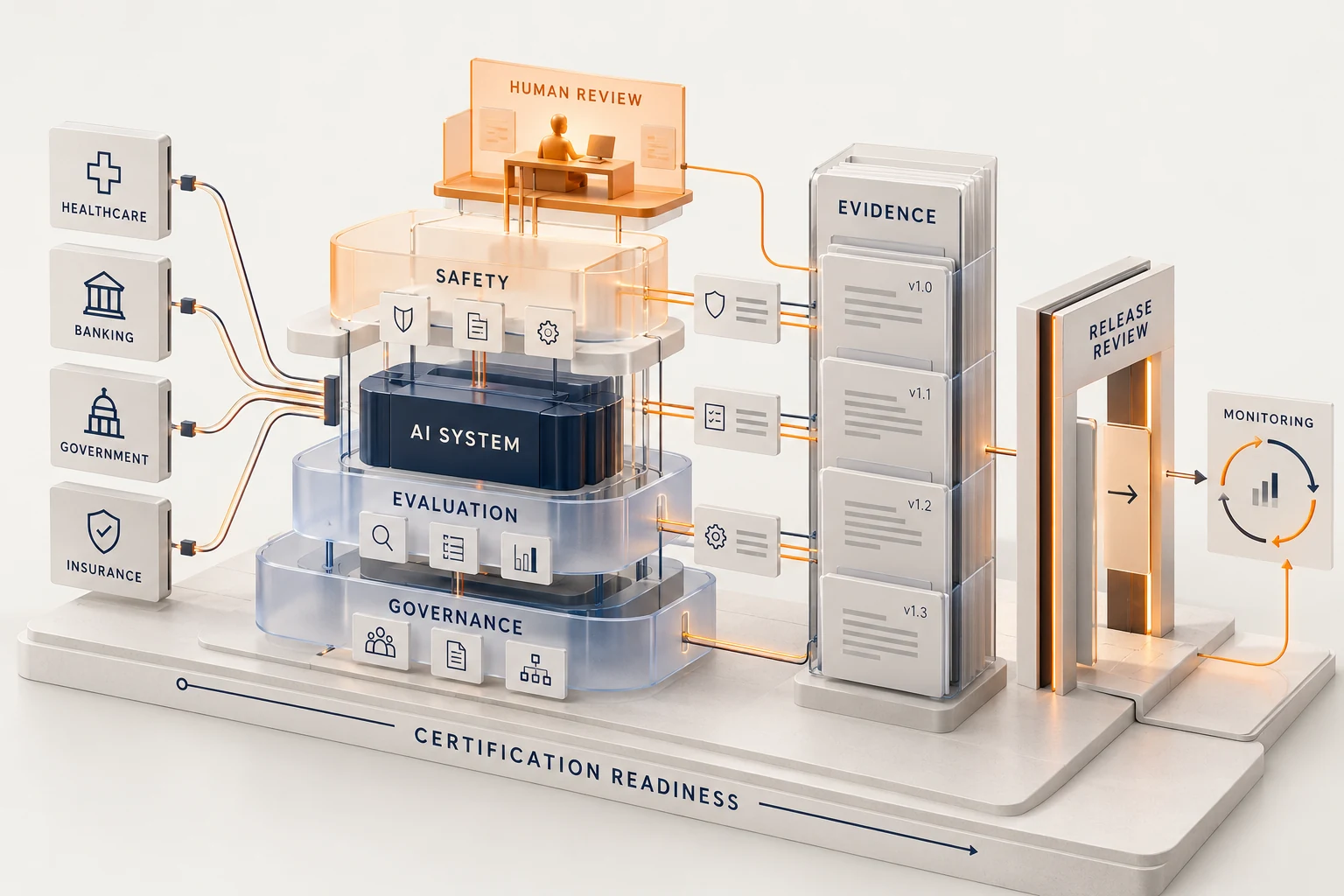
Start with the service, its users and its obligations.
A document assistant and a system affecting an individual’s rights need different controls. We map the intended use, authorised users, decision responsibilities and review needs before choosing the architecture.
Access
How are staff, partners and citizens separated across data and services?
Accountability
How can a proposed result be explained, reviewed and challenged where required?
Continuity
How will the service remain maintainable, transferable and recoverable?
Capabilities shaped around your use.

Applications & integration
Design portals, case workflows, document services and integrations with existing systems. Address accessibility, language and user needs in the project requirements.
Knowledge assistants
Make approved policies and documents easier to find. Use source references, permission-aware retrieval, freshness rules and abstention.
Controlled workflow automation
Combine deterministic rules, AI assistance and authorised human decisions. Keep sensitive business actions behind explicit execution controls.
Governance & operations
Define data and hosting boundaries, responsibilities, evaluation records, security review, recovery and change control.
Illustrative use cases, with explicit boundaries.
Examples include policy search for staff, document intake and triage, drafting assistance and interdepartmental handoffs. Sensitive decisions remain assigned to authorised people and governed processes. These examples describe possible architectures; they are not assertions of existing public-sector AI deployments.
Deliverables you can use.
Service & data map
Users, systems, information flows, decision ownership and intended-use boundaries.
Architecture & controls
Deployment and integration choices, permissions, oversight and the required review evidence.
Pilot & operating plan
Representative acceptance tests, known limits, handover and an agreed continuity plan.
A clear route from assumptions to evidence.
Understand
Map the service journey, affected people and operating constraints.
Define
Set data access, human authority and acceptance criteria.
Pilot
Test representative scenarios, accessibility and failure handling.
Review & operate
Document release decisions, responsibilities and ongoing oversight.
Public Sector, answered
Can public-sector AI run on controlled infrastructure?
Yes. Deployment options can include client-owned infrastructure, dedicated cloud or a governed hybrid design. Residency, access, keys, dependencies and operations need to be assessed together.
Should AI decide eligibility or rights?
The intended use must be assessed with the responsible stakeholders. Sensitive decisions require appropriate legal, governance and technical controls; an assistant must not be given authority by assumption.
Can you integrate existing systems?
Yes. Integration requirements, available interfaces, data ownership and operational responsibilities are assessed during architecture and scoping.
Do you guarantee regulatory approval?
No. We support requirements analysis, control implementation and evidence preparation. The applicable review and approval process depends on the system and use.

Start with your use case.
Bring the workflow, the constraints and the decision you need to make. Together we can define a useful next step and the evidence it should produce.